


At CBHS we help you manage your health challenges. We believe in offering you the services, support and tools you need to live your best life.
Health and Wellness Programs are available to support eligible members towards a healthier lifestyle. Each Health and Wellness Program is subject to its own eligibility criteria.
Contact us for more information and to confirm your eligibility for a program.
Strength training during menopause

We know that the transition to menopause signifies the end of a woman’s menstruating years (‘menstruation pause’). But there’s a lot more involved. During the phases of menopause, the body experiences a drop in hormones, particularly oestrogen and progesterone, which can cause a range of unwanted side effects, both physiological and psychological.
Maintaining a healthy lifestyle is crucial not only for optimal health and wellness during this time, but also to manage some of the symptoms of menopause. These include hot flushes, poor sleep, low mood and more.
While diet is a key factor, exercising regularly is just as important through menopause. For best results, include a mix of cardio for heart health, mobility exercises, like yoga, Pilates and tai chi, and strength training.
Here, we’ll focus on why strength training is particularly important during menopause and how you can get started.
Why weights?
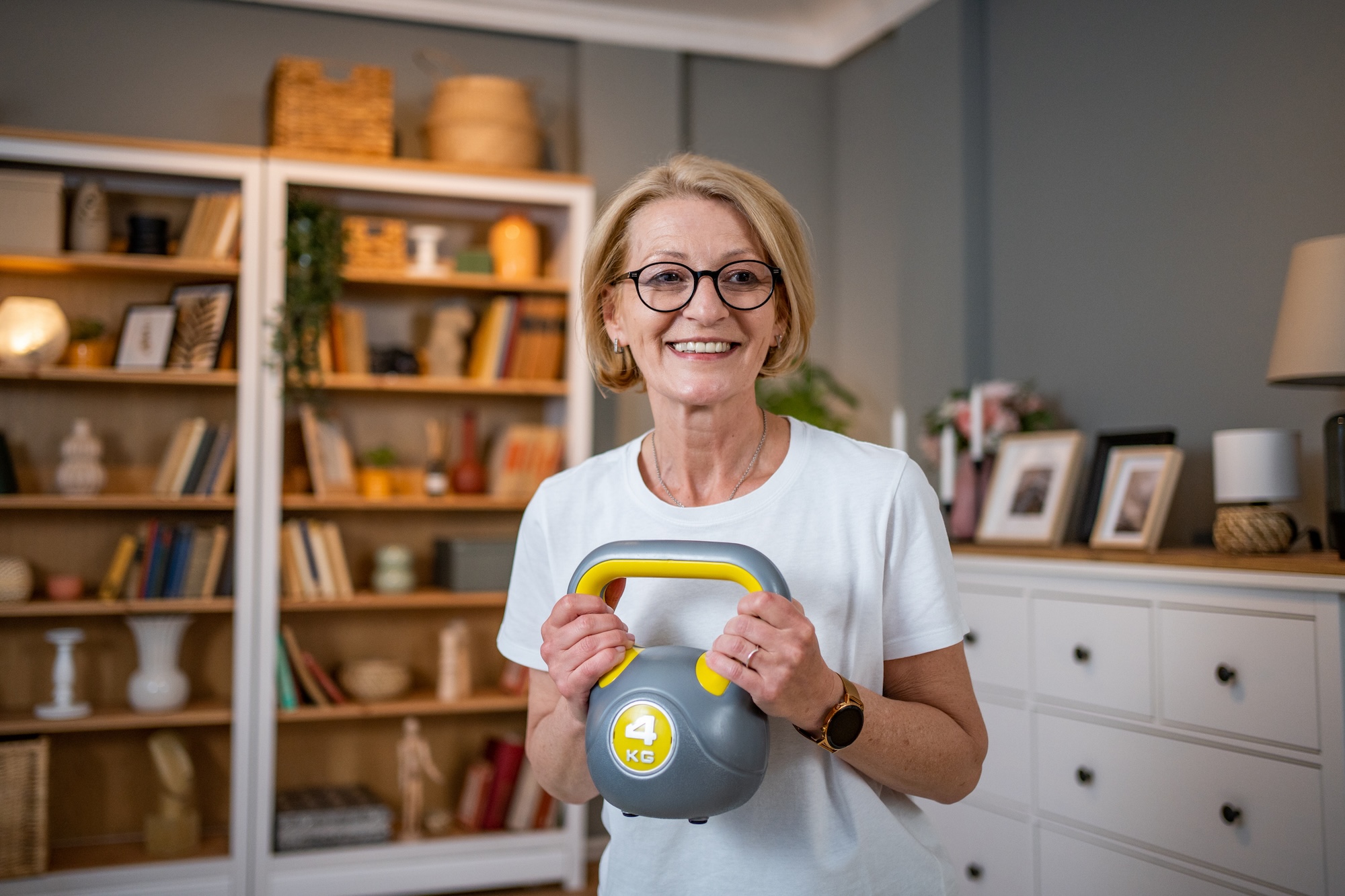
There are several benefits of strength training during menopause, including the following:
Maintaining bone density
With menopause comes a decline in oestrogen. An important role of oestrogen is to inhibit bone breakdown and stimulate bone formation. So, as your oestrogen levels decrease, the higher your risk of developing osteoporosis. On average, women lose up to 10% of their bone mass in the first five years after menopause, while 50% of women over 60 will experience at least one bone fracture due to osteoporosis. Weight training places stress on the bones, stimulating growth and working to strengthen them.
Maintaining muscle mass
Unfortunately, muscle loss, or sarcopenia, is an inevitable part of ageing. Muscle loss can lead to increased fragility, higher risk of falls and injury, and less mobility. From the time we reach 30 onwards, our muscle mass naturally begins to decline. This rate of decline accelerates from age 50, resulting in a loss of approximately 20% in muscle mass and 40% in muscle strength. A decline in oestrogen during menopause can accelerate muscle loss even further, making strength training especially beneficial during this life stage.
Visit your GP to discuss your personal risk of bone and muscle loss, and remember that some CBHS products provide contributions towards health checks, such as bone density tests, when the service isn’t covered by Medicare. See our article for a list of recommended health checks.

Increasing basal metabolic rate
Our basal metabolic rate (BMR) is a measurement of the energy our bodies need to perform basic daily functions, like breathing and blood circulation. The higher your BMR, the more calories you burn at rest.
Many women find it hard to manage a healthy weight during menopause. One reason for this is hormonal changes, which can cause a decline in metabolism. There are several factors contributing to your BMR, including height and weight, with an important one being muscle mass, as muscle requires more energy to fuel. This means the more muscle you have, the higher your BMR, and so the more calories you burn daily.
Releasing hormones
Exercise in general releases feel-good endorphins, which can help with symptoms such as low mood and anxiety, but as muscle is an endocrine (hormone-releasing) organ, targeting the muscles specifically through training produces several other benefits.
Some of the hormones released during muscle contraction include testosterone, adrenaline and adenosine. A common symptom of menopause is difficulty sleeping, and adenosine is a neurotransmitter that can help promote deeper sleep. Better sleep can help alleviate other menopause-related symptoms like fatigue, brain fog and low mood, and contribute to overall wellness.
Where do I start?

If you’re new to strength training, CBHS Exercise Physiologist Alia recommends strength training twice a week for 45 minutes, with an extra 15 minutes added to each session for mobility and stretching.
“I would invite any woman in menopause to speak with an allied health professional to have an initial consult to determine the beneficial amount of strength training,” she advises. Find an exercise physiologist or exercise scientist with menopause training via the Exercise Right website.
While finding time to exercise can be tricky, Alia suggests completing your strength training routine at least a couple of hours before bedtime, as vigorous activity can disrupt sleep. Closer to bedtime is a better time for light stretching, yoga or meditation to promote a restful night.
And you don’t need a gym membership or fancy equipment. A couple of light dumbbells, resistance bands and even your body weight may be all you need to create a strength training routine that works for you.
To help you get started, we’ve created two routines that use a mix of bodyweight, gym equipment and exercise bands.
As always, we suggest you consult your GP or health professional before starting any new exercise routine.
With proper guidance and a routine that fits into your schedule, you can remain strong and healthy throughout the phases of menopause and beyond.
All information contained in this article is intended for general information purposes only. The information provided should not be relied upon as medical advice and does not supersede or replace a consultation with a suitably qualified health care professional.
Sources:
https://www.menopause.org.au/hp/information-sheets/osteoporosis
https://healthybonesaustralia.org.au/news/exercises-for-osteoporosis/
https://aimss.org.au/research/about-musculoskeletal-diseases/sarcopenia/
https://www.betterhealth.vic.gov.au/health/conditionsandtreatments/metabolism
https://www.sleepfoundation.org/how-sleep-works/adenosine-and-sleep
https://www.cbhs.com.au/mind-and-body/blog/the-importance-of-flexibility